Institut für Ostseeforschung Warnemünde
IOW Logo

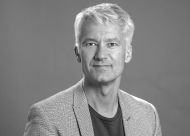
Gregor Rehder

Prof. Dr.

Gregor Rehder
Address:
Leibniz-Institute for Baltic Sea Research
Seestraße 15
18119 Rostock
Germany
Telephone:
+49 381 5197 336
Fax:
+49 381 5197 302
E-Mail:

Career

since 2006    Professor for Marine Chemistry and vice head of the Department of Marine Chemistry
    at the "Leibniz Institut für Ostseeforschung Warnemünde an der Universität Rostock"
    (IOW)
2001 - 2006  Assistant professor at the GEOMAR
2000 - 2001  Science Postdoctoral Fellow at the Monterey Bay Aquarium Research Institute, Moss
1997 - 2000  Research Associate at the GEOMAR Research Center, Kiel
                        Landing, California, U.S.A.
1996               Ph.D., University of Kiel
1993               Diploma (M.Sci.), University of Bayreuth

Current projects

  • (For details please klick here)
    In the year 2006, ICOS was recognized as an important research infrastructure by the Council of the European Union Research Ministers and it was added to the priority list (“roadmap”) of the European Strategy Forum on Research Infrastructures (ESFRI). ICOS aims to create an atmosphere, land and ocean monitoring network, able to reliably quantify sinks and sources of greenhouse gases and its catchment areas throughout Europe, and thus to identify and to document changes in the carbon cycle, for at least 20 years. ICOS allows to monitor and to assess the impact of human activities on the climate as well as the success and efficiency of avoidance and abatement strategies. The german component of ICOS (ICOS-D) is in its pilot phase since 2012. The entire installation of the monitoring network should be completed by 2016. In the framework of ICOS-D, the IOW further expands the required instrumentation installed on a ferry, operating on a regular and direct link between Travemünde and Helsinki (the FINNMAID, owned and operated by the shipping company Finnlines). Currently, hydrographical and biological basic parameters are being collected by the Finnish side (Project ALGALINE) whereas measurements of pCO2, pCH4 and oxygen content in the surface water are being conducted by the IOW. Being the only observation line established in a marginal sea, the „BALTIC-VOS“ line plays an important in connecting land and sea based observations in ICOS-D (VOS = voluntary observing ships). Due to anthropogenic impacts (eutrophication, warming), the already over decades documented changes in the Baltic Sea ecosystem are particularly strong and make this observation line especially suited to examine effects of a change in use or adopted environmental strategies on trace gas fluxes. Furthermore, it plays a key role in the development of a seagoing data acquisition system for the “Big Three” of trace gases relevant for the climate: CO2, CH4, N2O. Involved persons (IOW): Gregor Rehder (PI), Wanda Gülzow (project-funded scientist), Michael Glockzin (project-funded engineer).
  • (For details please klick here)
    ...under construction...

Recently ended projects

  • (For details please klick here)
    BALTIC GAS aims to understand how climate change and long-term eutrophication affect the accumulation of shallow gas and the emission of methane and hydrogen sulfide from the seabed to the water column and atmosphere. The outcome of the project will be a new understanding and quantitative synthesis of the dynamics and budget of methane in the seabed, an important but poorly understood component of the Baltic ecosystem response to natural and human- induced impacts. The project aims to develop a predictive model of gas accumulation and emission under realistic scenarios of climate change and eutrophication, which will improve the knowledge base for necessary future policy actions. The multidisciplinary project will involve 12 partner institutions from 5 nations and will apply modern advanced technology and novel combinations of approaches.
  • (For details please klick here)
    Under construction...
  • (For details please klick here)
    The Gotland Deep Environmental Sampling Station (GODESS) is a profiling mooring, meaning that a profiling body with the payload (the instruments making measurements) is ascending and descending through the water column at predefined times or intervals. During a deployment of the mooring (typically between 3 and 6 months) repeated profiles of the measured parameters are registered so that we gain an insight of the changes and dynamics during this deployment period. A special interest for this station is the redoxcline in the Gotland Basin between the oxygenated surface layers and the anoxic deep layer.